
Strategy Framework
Visual overview of the digital transformation roadmap.
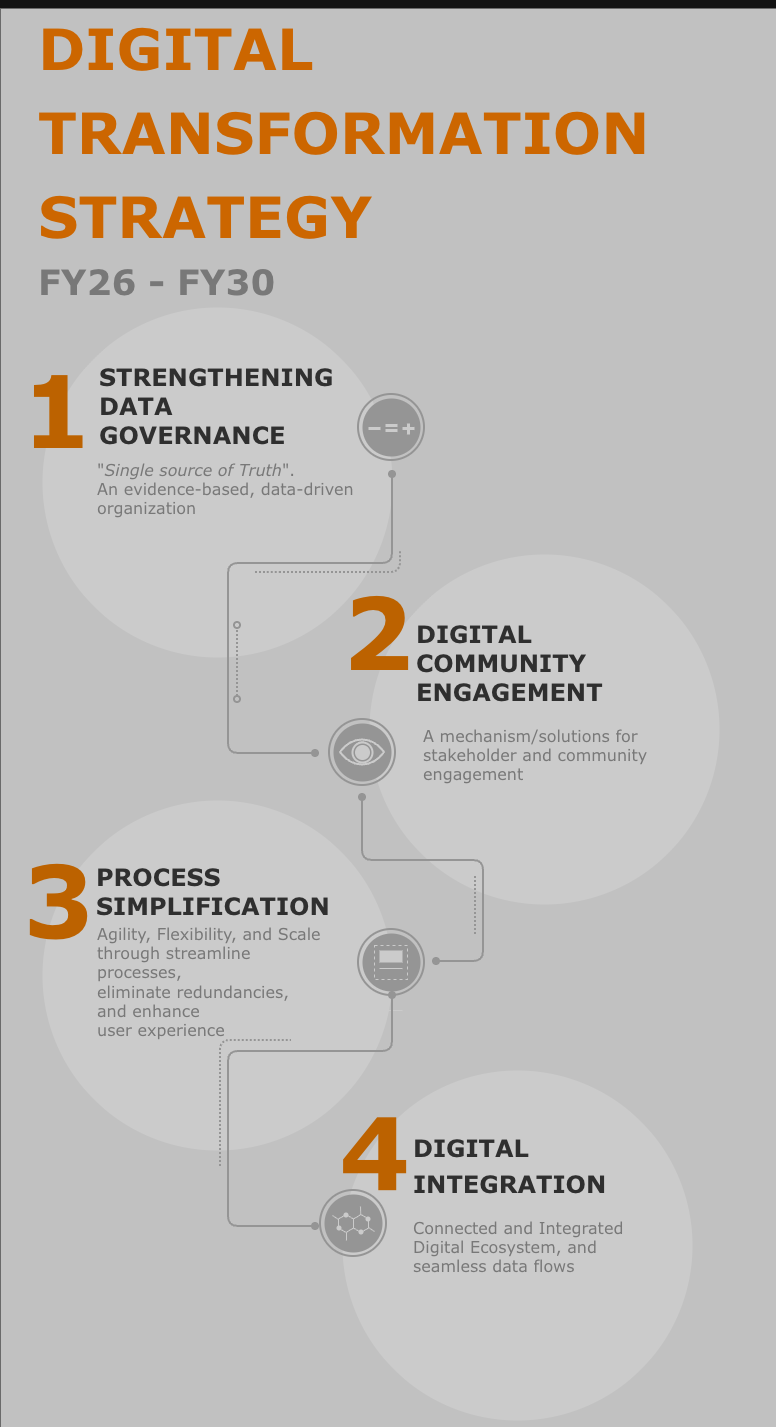
Strengthening data governance, digital integration, community engagement, and process simplification to accelerate impact.
Visual overview of the digital transformation roadmap.
Strategic objectives and child well-being impact goals.
Children Well-being
Target by 2030
Most Vulnerable Children
Direct reach target
Water-related Illnesses
Prevention target
Four capability pillars that support delivery excellence.
Ensure accuracy, integrity, and accountability in decision-making processes.
Improve participation, transparency, and service delivery through digital platforms.
Streamline processes, eliminate redundancies, and improve user experience across workflows.
Connect platforms for seamless data flow and coordinated, data-driven decisions.
During the 2026-2030 Strategic Period, World Vision aims to contribute to the sustained well-being of 13.3 million children by 2030, including over 3 million of the most vulnerable reached directly. The organization will prioritize critical child well-being issues, with a particular focus on:
To achieve this ambitious goal, the strategy places strong emphasis on technological and digital innovation as a key enabler of transformational impact. Digital transformation is positioned as a core strategic pillar that will drive efficiency, accountability, and evidence-based decision-making across regional and country programs.
Historically, World Vision has faced several operational challenges including data silos, parallel and complex manual processes, limited transparency, inaccurate reporting, and resource inefficiencies. The 2026-2030 Strategy seeks to overcome these barriers by integrating digital innovation solutions, automating core processes, and strengthening data governance and interoperability, enabling a more agile, simplified, integrated, transparent, and impact-driven organization.
This Digital Transformation Strategy provides a unified vision and framework outlining the critical actions World Vision Kenya must take to achieve operational excellence, accelerate digital transformation, and strengthen delivery across organizational functions and ministry interventions. Priority action areas include: